
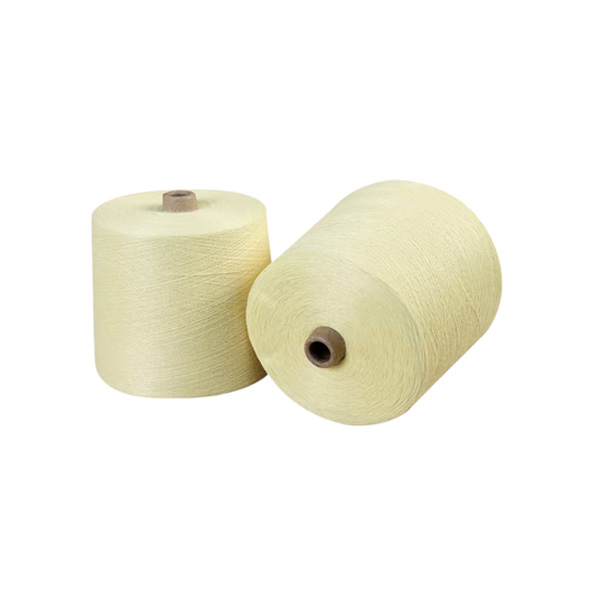
Properties, Performance, Applications & Drawbacks: Meta-Aramid vs. Para-Aramid Fibers
Category | Meta-Aramid Fiber | Para-Aramid Fiber |
Properties | - High temperature resistance: Decomposition temperature 371°C (no melting, direct carbonization)- Flame retardancy: Limited oxygen index (LOI) 29%, inherently flame-retardant, non-combustible in air | - High temperature resistance: Decomposition temperature 500°C- Flame retardancy: LOI 29%, inherently flame-retardant, non-combustible in air |
Performance | - Breaking strength: 4–5g/D- Initial modulus: 60–120g/D | - Breaking strength: 20–27g/D (4–5x that of steel wire)- Initial modulus: 600–800g/D (2–3x that of steel wire) |
Applications | - Environmental protection: High-temperature filter materials, high-temperature flue gas dust removal- Insulating materials: Electrical insulation paper, flame-retardant fabrics- Safety protection: Firefighting suits, racing suits- **High-temperature conveyor belts, rubber reinforcement, etc. | - Reinforcing materials: High-strength ropes, optical fiber reinforcement, high-strength fabrics, straps, etc.- Protective materials: Bulletproof vests, bulletproof helmets, etc.- Composite materials: Aerospace, vehicle bodies, high-speed railways, etc.- Friction materials: Brake pads, seals |
Drawbacks | - Poor sunlight stability; lower strength than para-aramid | - Poor moisture absorption; poor sunlight resistance; cannot be dyed |
Meta-aramids – manufactured differently from para-aramids, meta-aramids are developed in a chemical solution, often referred to as wet spinning. These fibers are highly resistant to temperature, chemical degradation, and abrasion. They have a tenacity of about 5.6g/den and can withstand stress during fire exposure and high temperatures.
Para-aramids – these fibers are manufactured with a much higher tenacity of 23g/den. Para-aramids are more durable than meta-aramids, which means they are utilized in products that require greater tensile strength, such as cut-resistant gloves. They can take on more stress than most other materials, like a simple cotton textile. For example, DuPont™ Kevlar® is 5X more durable than steel, making it the ideal match for cut-resistant gloves, where protection from sharp metal is a must.


Tel : 0086 574 87894622
+86 15314551713

+86 15314551713

5F, Dongfang Building, No.456 Xingning Road, Yinzhou, Ningbo, 315040, China

